
If you have ever felt a burning sensation in your chest after eating or while lying down, you may have experienced acid reflux. It is one of the most common digestive conditions affecting Australians today. According to the Australian Institute of Health and Welfare, an estimated 15-20% of Australians experience reflux symptoms each week.
This condition affects not only the digestive system but also day-to-day well-being, sleep quality, and mental health. Reflux symptoms are consistently ranked among the top ten reasons Australians visit their GP.
One major contributor is excess abdominal pressure caused by body weight. With over 67 per cent of Australian adults now classified as overweight or obese (ABS 2023), the risk of developing reflux symptoms has significantly increased. Excess weight can weaken the muscle at the base of the oesophagus, allowing acid from the stomach to escape into the throat and chest.
At the Reflux & Swallowing Center in Brisbane, we specialise in diagnosing and treating reflux using advanced tools and personalised treatment plans. We aim to identify the root cause and offer relief that lasts.
What is Acid Reflux
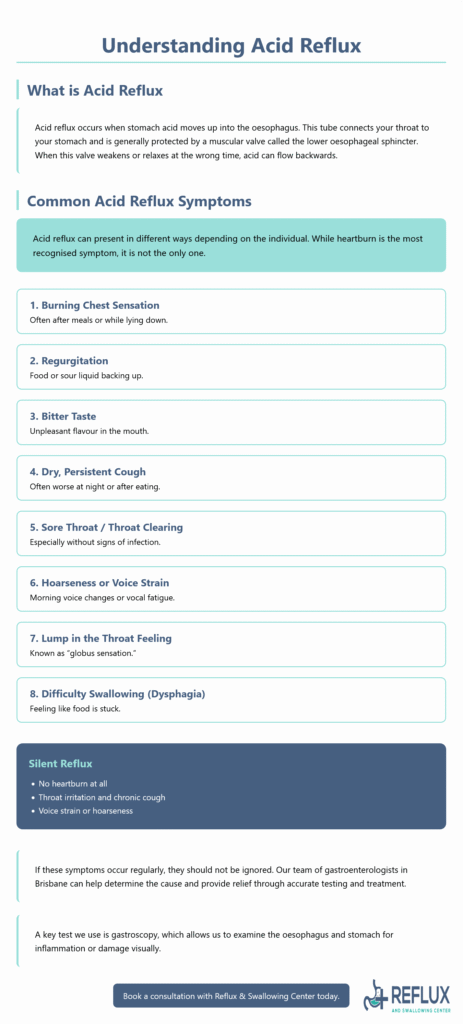
Acid reflux occurs when stomach acid moves up into the oesophagus. This tube connects your throat to your stomach and is generally protected by a muscular valve called the lower oesophageal sphincter. When this valve weakens or relaxes at the wrong time, acid can flow backwards.
This backflow irritates the oesophageal lining and causes the sensation of heartburn. When reflux happens more than twice a week or leads to persistent symptoms, it may be diagnosed as Gastroesophageal Reflux Disease (GERD).
GERD is not just uncomfortable — it can lead to serious health problems over time. Repeated acid exposure can cause:
- Oesophagitis (inflammation of the oesophagus).
- Ulcers or bleeding.
- Strictures (narrowing of the oesophagus).
- Barrett’s oesophagus (a precancerous condition).
That is why prompt diagnosis and ongoing management are so important.
Common Acid Reflux Symptoms
Acid reflux can present in different ways depending on the individual. While heartburn is the most recognised symptom, it is not the only one.
The most common acid reflux symptoms include:
- Burning sensation in the chest after eating or lying down.
- Regurgitation of food or sour liquid.
- Bitter taste in the mouth.
- Dry, persistent cough.
- Sore throat or frequent throat clearing.
- Hoarseness or voice changes.
- A sensation of a lump in the throat.
- Difficulty swallowing (dysphagia).
Some people experience what is known as “silent reflux”, where they do not feel heartburn at all but still suffer from throat irritation, cough, or voice strain.
If these symptoms occur regularly, they should not be ignored. Our team of gastroenterologists in Brisbane can help determine the cause and provide relief through accurate testing and treatment.
A key test we use is gastroscopy, which allows us to examine the oesophagus and stomach for inflammation or damage visually.
Causes of Acid Reflux
There is no single cause of acid reflux. For most people, it results from a combination of lifestyle habits, body mechanics, and sometimes anatomical issues.
Common acid reflux causes include:
- Eating large or fatty meals.
- Lying down soon after eating.
- Spicy or acidic foods such as tomatoes and citrus.
- Chocolate, caffeine, and alcohol.
- Smoking.
- Obesity or weight gain.
- Pregnancy.
- Hiatal hernia.
- Certain medications, including NSAIDs, sedatives, and calcium channel blockers.
To identify your personal triggers, our specialists may recommend further testing. At the Reflux & Swallowing Center, we use diagnostic tools such as 24-hour pH monitoring and oesophageal manometry to measure acid exposure and assess how well your oesophagus functions.
This enables us to pinpoint the exact cause and develop a treatment strategy tailored to your condition.
When You Should See a Specialist
Not all reflux needs specialist care. However, if your symptoms are frequent, persistent, or unresponsive to medication, it is time to seek help.
You should see a specialist if you experience:
- Reflux symptoms more than twice per week.
- Symptoms that persist despite taking antacids or acid blockers.
- Difficulty or pain when swallowing.
- Ongoing nausea, vomiting, or bloating.
- Chronic cough, hoarseness, or throat discomfort.
- Unexplained weight loss.
- Chest pain not related to the heart.
If you are experiencing any of the above, our experienced team at the Reflux & Swallowing Center can perform a full evaluation and guide you toward lasting relief.
How Reflux is Diagnosed
Accurate diagnosis is essential for effective treatment. At our Brisbane clinic, we use a range of evidence-based diagnostic tools to understand what is causing your symptoms and how severe they are.
These include the following:
Bravo wireless pH monitoring
This test uses a small capsule that attaches to the oesophagus during a gastroscopy. It measures acid exposure over 48 to 96 hours without wires or tubes. You can learn more about this procedure on our Bravo pH test Brisbane page.
Video capsule endoscopy
This test involves swallowing a small, pill-sized camera that captures thousands of images throughout your digestive tract. It is available as part of our video capsule endoscopy services in Brisbane.
Oesophageal manometry
This evaluates oesophageal muscle strength and coordination. It helps identify motility disorders and is available through our oesophageal manometry service in Brisbane.
24-hour pH monitoring
This gold-standard test tracks acid levels in the oesophagus over a full day and night. You can find more information on our 24-hour pH monitoring test page.
Each test is carefully selected to match your symptoms and history, providing the most straightforward path to diagnosis and treatment.
Lifestyle Changes That May Help
For many people, adjusting certain behaviours can significantly reduce the frequency and severity of reflux symptoms.
Evidence-based lifestyle strategies include:
- Eating smaller, more frequent meals.
- Avoiding meals within two to three hours of bedtime.
- Reducing intake of spicy, fatty, or acidic foods.
- Limiting caffeine, chocolate, and alcohol.
- Elevating the head of the bed.
- Quitting smoking.
- Managing stress.
- Losing excess weight.
If weight is a contributing factor, the Reflux & Swallowing Center offers non-surgical weight-loss options. The Orbera gastric balloon and Spatz3 adjustable balloon can help patients lose weight and reduce abdominal pressure, which often improves reflux symptoms.
We provide tailored advice and medical support to help you make lasting changes that support your digestive health.
Preventing Long-Term Complications
Persistent reflux can damage the oesophagus and lead to complications. Early treatment reduces this risk.
Potential complications of unmanaged reflux include:
- Oesophagitis (inflammation and irritation).
- Strictures (narrowing of the oesophagus due to scar tissue).
- Barrett’s oesophagus (cell changes that may increase cancer risk).
- Oesophageal cancer (rare but serious).
At the Reflux & Swallowing Center, we take a proactive approach by offering regular monitoring and follow-up for patients with chronic reflux or Barrett’s oesophagus. Our goal is to protect your long-term health and catch issues early when they are most treatable.
Personalised Treatment Plans
Every case of reflux is different. What works for one person may not work for another. That is why we develop individualised care plans based on your symptoms, test results, lifestyle, and health goals.
Your treatment plan may include:
- Prescription medications.
- Dietary and behavioural modifications.
- Endoscopic treatments.
- Non-surgical weight loss support.
- Ongoing testing and surveillance.
At the Reflux & Swallowing Center, our team of expert gastroenterologists in Brisbane is committed to helping you feel better with compassionate, evidence-based, and tailored care.
Conclusion
Acid reflux is a common condition, but it should not be ignored. Whether you experience mild heartburn or severe and persistent symptoms, professional support can help you find relief and prevent complications.
With the correct diagnosis and personalised treatment, you can manage reflux effectively and reclaim your quality of life.
The Reflux & Swallowing Center in Brisbane is here to help. From diagnosis to long-term care, our team is ready to guide you every step of the way.
If acid reflux symptoms are affecting your sleep, diet, or confidence, book a consultation today and take the first step toward long-term relief.
Frequently Asked Questions
What are the early warning signs of acid reflux?
Heartburn, sour taste, regurgitation, throat irritation, and cough are common early symptoms.
When should I see a specialist for reflux?
If symptoms occur more than twice a week, persist despite medication, or interfere with eating or sleeping, it is time to see a specialist.
What tests are available to diagnose reflux?
Tests include gastroscopy, Bravo pH monitoring, video capsule endoscopy, and oesophageal manometry.
Can reflux lead to serious health problems?
Yes. If left untreated, reflux can lead to inflammation, strictures, Barrett’s oesophagus, and in rare cases, oesophageal cancer.
Are there non-surgical options for weight-related reflux?
Yes. We offer the Orbera and Spatz3 gastric balloons to support weight loss and reduce reflux symptoms.