

Written and reviewed by Dr Ali Zad, FRACP gastroenterologist, Brisbane. Last reviewed November 2026 against current Australian and international guidelines. General information only, not a substitute for personal medical advice.
A hiatus hernia is one of several causes of acid reflux.
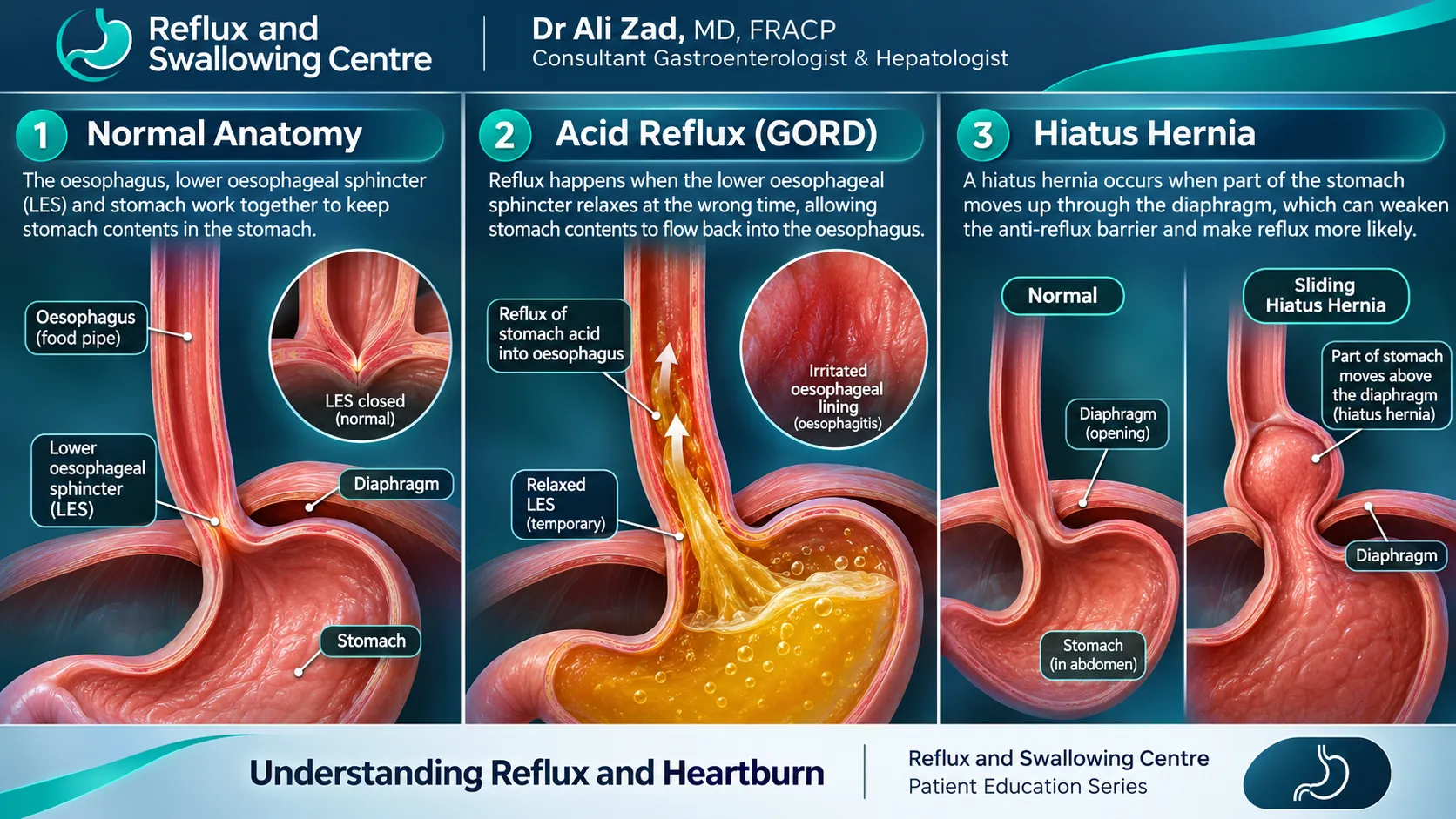
What is a hiatus hernia?
A hiatus hernia occurs when part of the stomach pushes up through the diaphragm into the chest. Small hiatus hernias are common and often cause no symptoms, but they can make reflux worse.
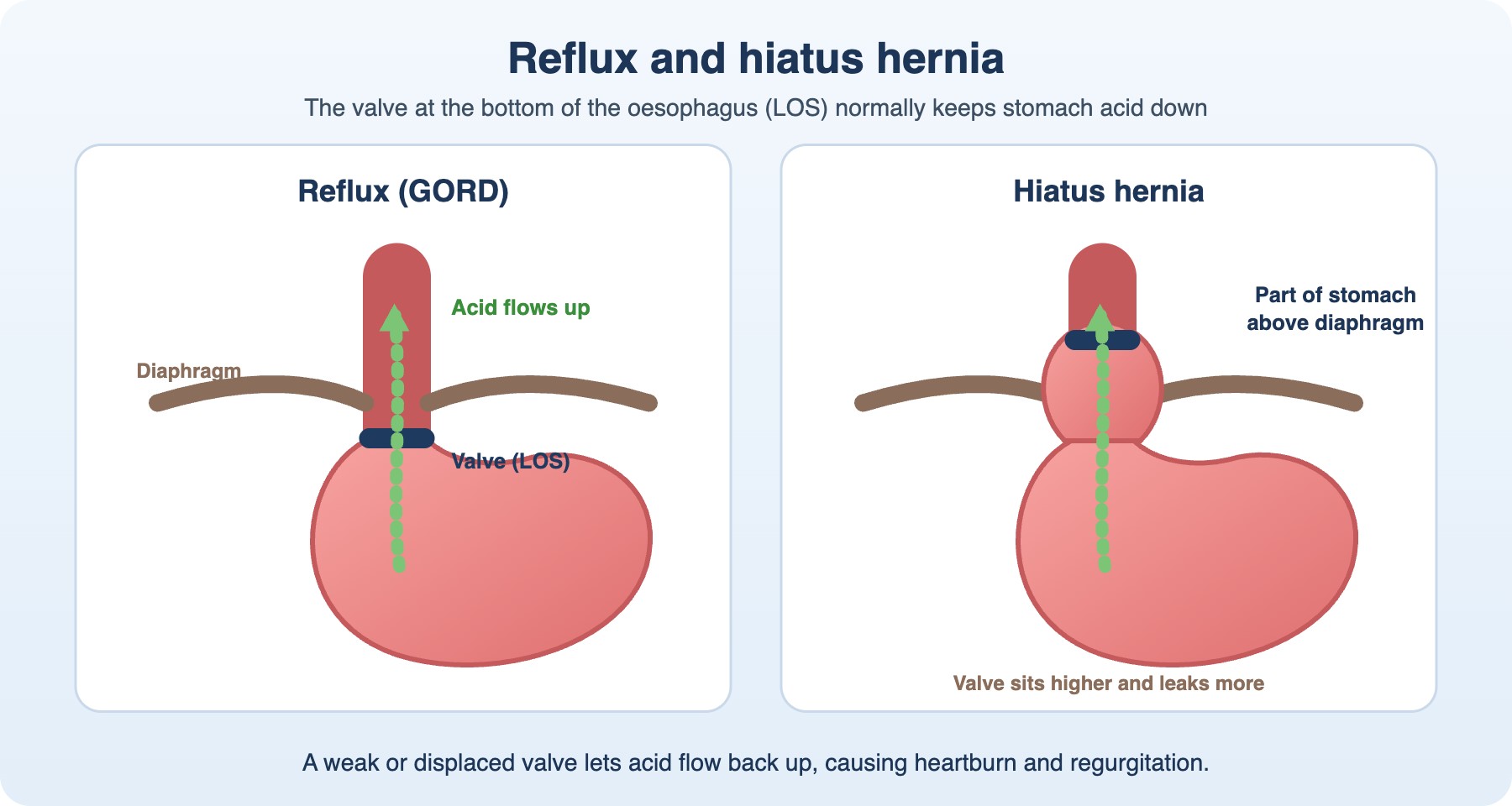
Does a hiatus hernia need surgery?
Most do not. Symptoms are usually managed with lifestyle changes and reflux medicines. Surgery may be considered for large hernias, persistent reflux despite treatment, or complications, after appropriate testing.
Related procedures and information
- Gastroscopy with Dr Ali Zad
- 24-hour pH monitoring with Dr Ali Zad
- Bravo wireless pH test with Dr Ali Zad
- All digestive health questions and answers
- Patient education videos
Book an appointment
If you have symptoms of hiatus hernia, see your GP or book a consultation with gastroenterologist Dr Ali Zad on (07) 2111 2600 or request an appointment online. You can book directly; a GP referral is needed for a Medicare rebate.
Dr Zad consults and performs procedures across Brisbane and Moreton Bay: Brisbane City and Spring Hill, North Lakes, Caboolture, Everton Park, Taringa and Redcliffe and Kippa-Ring.
See Dr Zad near you
Dr Ali Zad consults and performs gastroscopy and colonoscopy at seven hospitals:
- Gastroenterologist Brisbane City – Brisbane Private and St Andrew’s, Spring Hill
- Gastroenterologist Caboolture – Caboolture Private Hospital
- Gastroenterologist Redcliffe – Peninsula Private Hospital, Kippa-Ring
- Gastroenterologist Everton Park – North West Private Hospital
- Gastroenterologist North Lakes – North Lakes Day Hospital
- Gastroenterologist Taringa – Westside Private Hospital
- Gastroenterologist Bribie Island – consultations in Bongaree
Book on (07) 2111 2600 or request an appointment online.