
Written and reviewed by Dr Ali Zad, FRACP gastroenterologist, Brisbane. Last reviewed November 2026 against current Australian and international guidelines. General information only, not a substitute for personal medical advice.
On this page
What is coeliac disease?
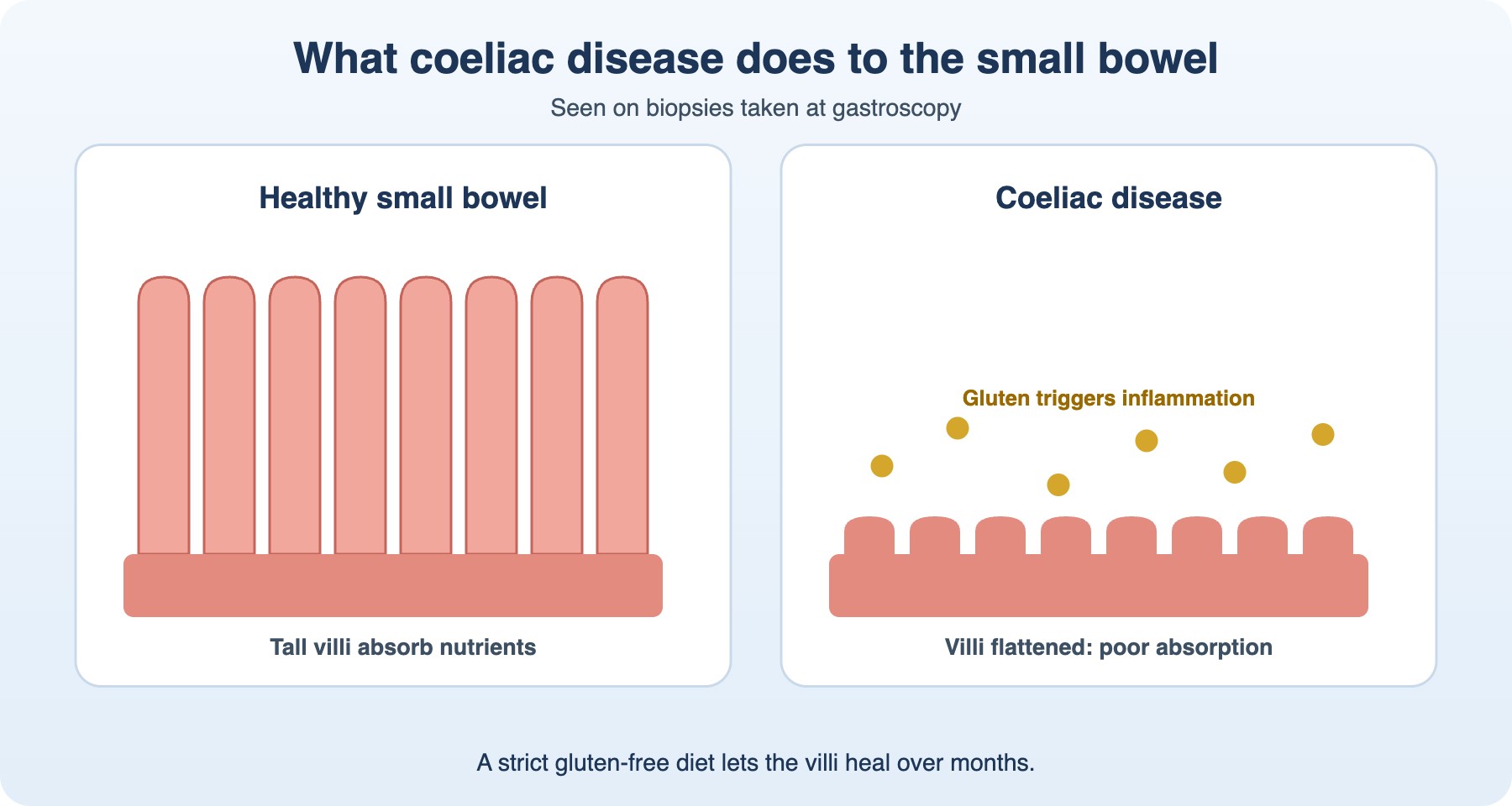
Coeliac disease is an autoimmune condition where gluten (found in wheat, barley, rye and oats) damages the lining of the small intestine. It affects about 1 in 70 Australians, but many people are undiagnosed.
What are the symptoms?
Symptoms vary widely and can include bloating, diarrhoea, constipation, tiredness, iron deficiency, weight loss, mouth ulcers or no obvious symptoms at all. It can run in families.
How is coeliac disease diagnosed?
Testing starts with a blood test (tTG-IgA with total IgA), followed by small bowel biopsies at gastroscopy to confirm the diagnosis in adults. Keep eating gluten until testing is complete, as a gluten-free diet can make results falsely normal.
Guideline: Coeliac Australia; GESA coeliac disease guidance.
How is it treated?
Treatment is a strict, lifelong gluten-free diet, ideally with support from a dietitian. Follow-up checks your response, iron and vitamin levels, and bone health.
Can coeliac disease develop later in life?
Yes. Coeliac disease can be diagnosed at any age, including in older adults, even if you have eaten gluten without problems for many years.
Should my family be tested?
Yes. First-degree relatives (parents, brothers, sisters and children) of someone with coeliac disease have about a 1 in 10 chance of having it, and many have no symptoms, so a blood test is recommended. A negative test may need repeating later if symptoms develop.
Guideline: Medical Journal of Australia, 2023; Coeliac Australia.
What is the gluten challenge?
If you have already stopped gluten, accurate testing requires eating it again. Coeliac Australia recommends about 10 g of gluten a day for adults (roughly 4 slices of wheat bread) for at least 6 weeks before blood tests and biopsies, using wheat-based foods. A genetic test (HLA-DQ2/DQ8) can help rule out coeliac disease without a gluten challenge.
Guideline: Coeliac Australia Gluten Challenge Fact Sheet.
Related procedures and information
Book an appointment
If you have symptoms of coeliac disease, see your GP or book a consultation with gastroenterologist Dr Ali Zad on (07) 2111 2600 or request an appointment online. You can book directly; a GP referral is needed for a Medicare rebate.
Dr Zad consults and performs procedures across Brisbane and Moreton Bay: Brisbane City and Spring Hill, North Lakes, Caboolture, Everton Park, Taringa and Redcliffe and Kippa-Ring.