
Written and reviewed by Dr Ali Zad, FRACP gastroenterologist, Brisbane. Last reviewed November 2026 against current Australian and international guidelines. General information only, not a substitute for personal medical advice.
On this page
What is IBS?
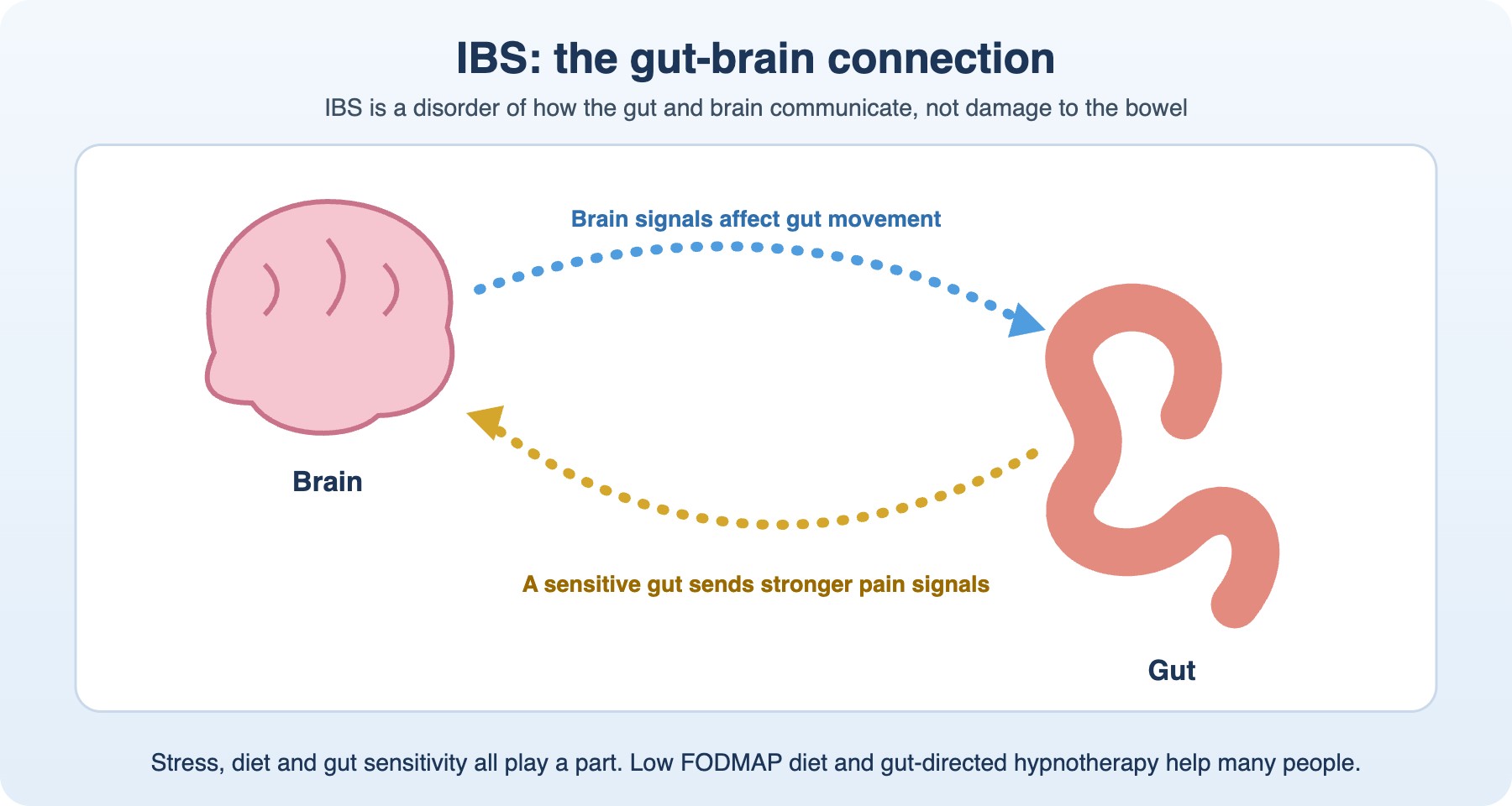
Irritable bowel syndrome is a common condition affecting how the gut and brain communicate. It causes abdominal pain, bloating and changes in bowel habit (diarrhoea, constipation or both) without damage to the bowel.
How is IBS diagnosed?
IBS is diagnosed from your symptoms using the Rome IV criteria, after other conditions have been considered. Blood tests (including coeliac serology) and a stool calprotectin test are often done. A colonoscopy may be recommended if there are warning signs such as bleeding, weight loss, anaemia, a family history of bowel cancer or new symptoms after age 45.
Guideline: Rome IV criteria.
What helps IBS?
Effective treatments include dietary changes such as a dietitian-guided low FODMAP diet, soluble fibre, regular meals, stress management, gut-directed hypnotherapy and medicines targeted to your main symptoms. Most people improve significantly with a tailored plan.
What is the low FODMAP diet?
FODMAPs are types of carbohydrates found in foods such as wheat, onion, garlic, legumes, some fruits and dairy. They can cause wind, bloating and changes in bowel habit in people with IBS. The diet involves a short elimination phase (2 to 6 weeks) followed by reintroduction to find your personal triggers, ideally guided by a dietitian. It is not meant to be followed strictly long term.
Guideline: Monash University low FODMAP program.
Can IBS turn into something more serious?
No. IBS does not damage the bowel or lead to cancer or inflammatory bowel disease. However, new symptoms or warning signs should always be checked, because IBS can occur alongside other conditions.
Does stress cause IBS?
Stress does not cause IBS on its own, but the gut and brain are closely connected, so stress and anxiety can trigger or worsen symptoms. Treatments that target the gut-brain connection, such as gut-directed hypnotherapy, are effective for many people.
Related procedures and information
Book an appointment
If you have symptoms of irritable bowel syndrome, see your GP or book a consultation with gastroenterologist Dr Ali Zad on (07) 2111 2600 or request an appointment online. You can book directly; a GP referral is needed for a Medicare rebate.
Dr Zad consults and performs procedures across Brisbane and Moreton Bay: Brisbane City and Spring Hill, North Lakes, Caboolture, Everton Park, Taringa and Redcliffe and Kippa-Ring.