

Written and reviewed by Dr Ali Zad, FRACP gastroenterologist, Brisbane. Last reviewed November 2026 against current Australian and international guidelines. General information only, not a substitute for personal medical advice.
On this page
What are haemorrhoids?
Haemorrhoids are swollen blood vessels in and around the anus and lower rectum. They can cause painless bright red bleeding, a lump, itching or discomfort, and are often linked to constipation and straining.
When should I worry about rectal bleeding?
Rectal bleeding should always be checked by a doctor, even if you think it is from haemorrhoids. See a doctor promptly if bleeding is new, ongoing, mixed with the stool, or comes with a change in bowel habit, weight loss, tiredness or a family history of bowel cancer.
How are haemorrhoids treated?
Most improve with more fibre and fluids, avoiding straining and short-term creams. Internal haemorrhoids that keep bleeding or prolapsing can be treated with rubber band ligation, a quick procedure often done during colonoscopy.
What does the colour of the blood tell me?
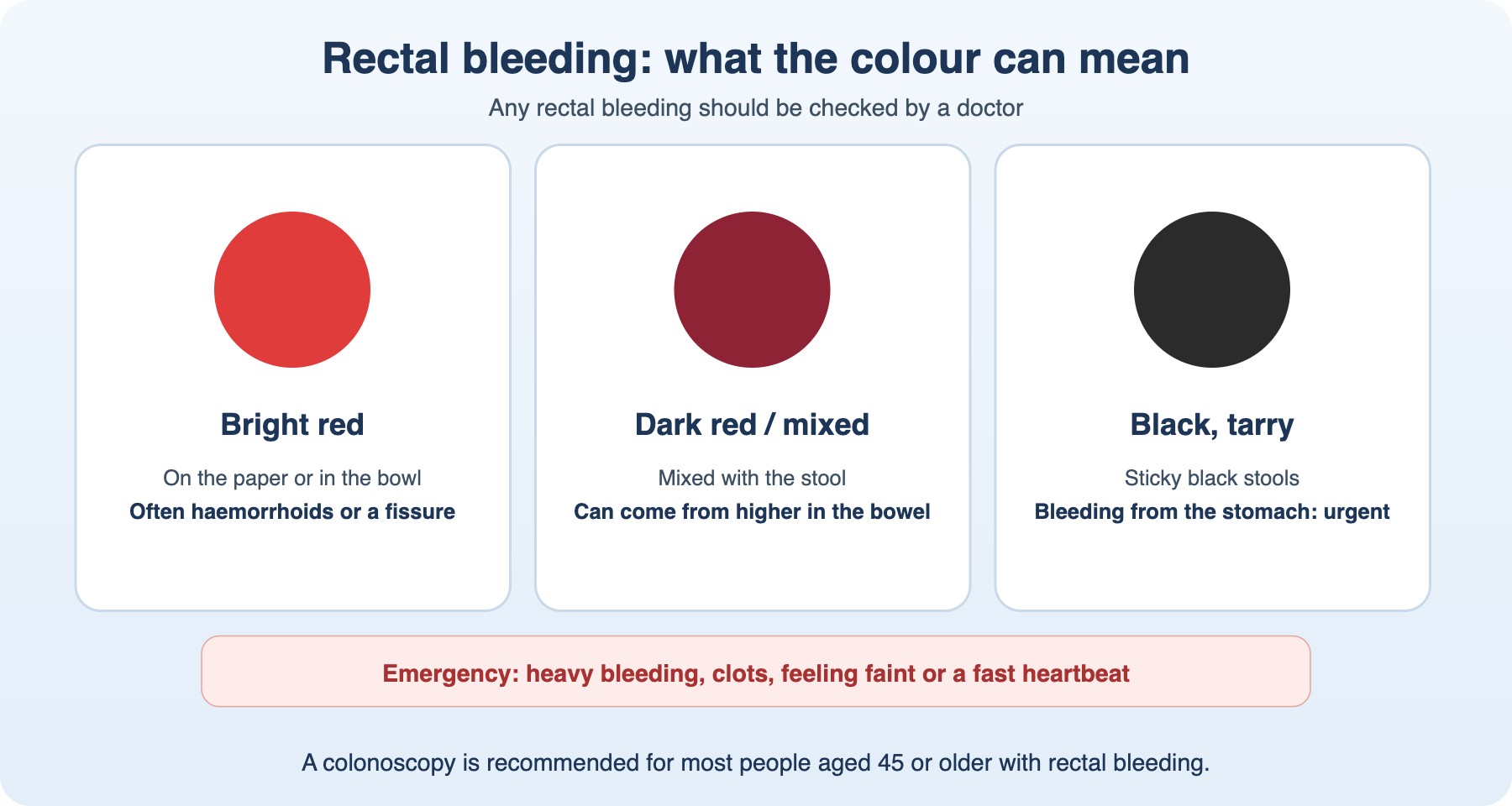
Bright red blood on the toilet paper or in the bowl usually comes from near the anus, such as haemorrhoids or a fissure. Darker blood mixed with the stool can come from higher in the bowel. Black, tarry stools usually mean bleeding from the stomach or upper gut and need urgent assessment. Iron tablets and some foods can also darken stools.
What is an anal fissure?
An anal fissure is a small tear in the lining of the anus, often caused by passing a hard stool. It causes sharp pain during and after bowel motions and a small amount of bright red bleeding. Most heal with softer stools, fibre and prescribed ointments.
Will I need a colonoscopy for rectal bleeding?
Often, yes. A colonoscopy is recommended if you are over 45, have a family history of bowel cancer, bleeding mixed with the stool, a change in bowel habit, weight loss or iron deficiency. Younger people with typical haemorrhoid bleeding may only need an examination, but your doctor will advise.
When is rectal bleeding an emergency?
Go to an emergency department if you are passing a large amount of blood or clots, feel faint or dizzy, have a fast heartbeat, or have severe abdominal pain with bleeding.
Related procedures and information
- Colonoscopy with Dr Ali Zad
- Haemorrhoid banding with Dr Ali Zad
- All digestive health questions and answers
- Patient education videos
Book an appointment
If you have symptoms of haemorrhoids and rectal bleeding, see your GP or book a consultation with gastroenterologist Dr Ali Zad on (07) 2111 2600 or request an appointment online. You can book directly; a GP referral is needed for a Medicare rebate.
Dr Zad consults and performs procedures across Brisbane and Moreton Bay: Brisbane City and Spring Hill, North Lakes, Caboolture, Everton Park, Taringa and Redcliffe and Kippa-Ring.