

On this page
When should I see a specialist about constipation?
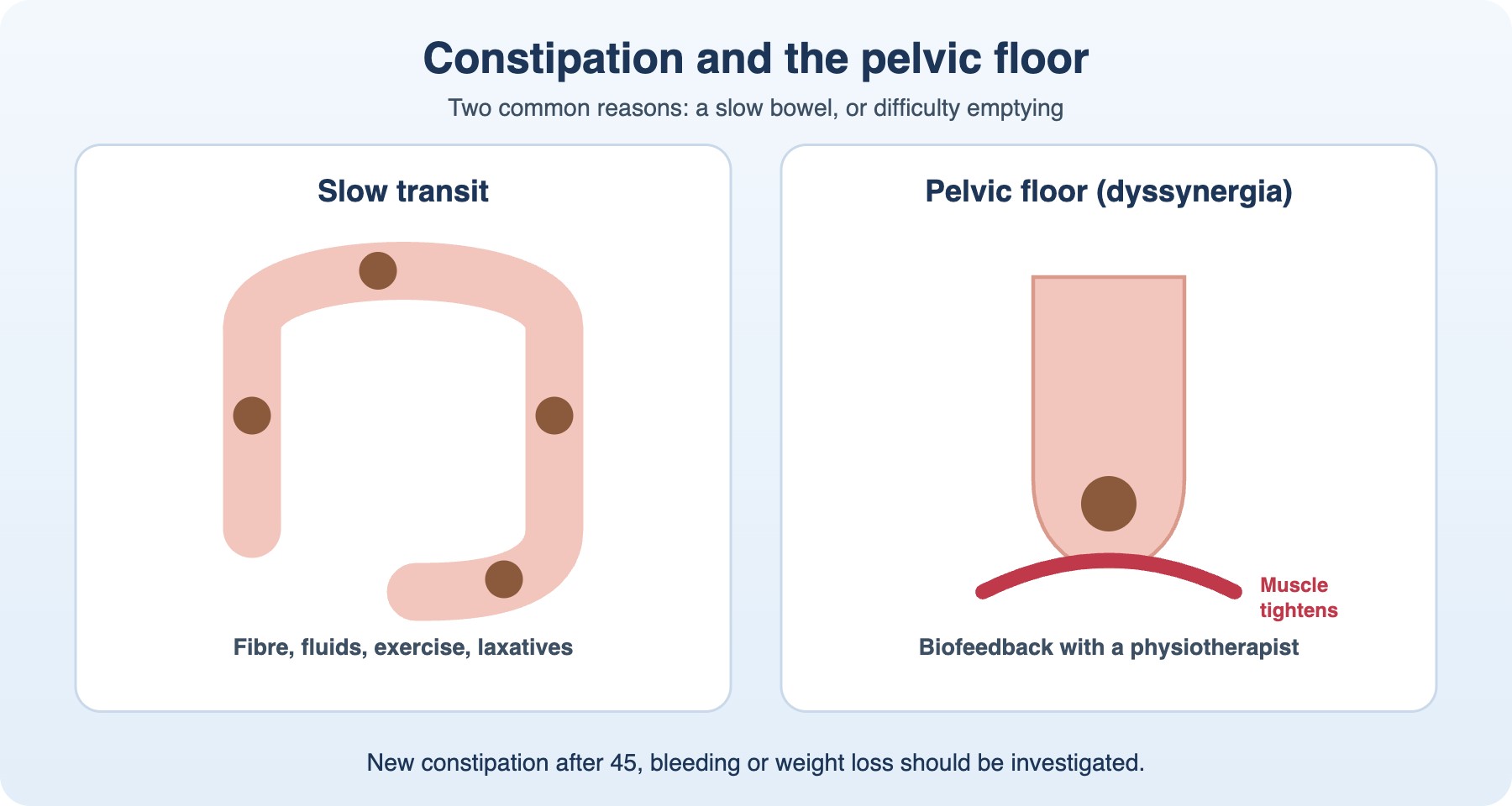
See your doctor if constipation is new or persistent, does not respond to fibre, fluids and laxatives, or comes with bleeding, weight loss, abdominal pain or anaemia. New bowel changes after the age of 45 should be investigated.
What causes bloating?
Common causes include IBS, constipation, swallowing air, certain foods (FODMAPs), lactose intolerance, coeliac disease and small intestinal bacterial overgrowth. Persistent bloating with weight loss, bleeding or a change in bowel habit needs medical review.
What is diverticular disease?
Diverticula are small pouches in the wall of the large bowel and are very common with age. Most cause no problems. Diverticulitis occurs when a pouch becomes inflamed, causing pain (usually in the lower left abdomen), fever and tenderness, and needs prompt medical assessment.
Which laxatives are safe to use?
Bulk-forming fibre supplements such as psyllium and osmotic laxatives such as macrogol (polyethylene glycol) are generally safe for regular use. Stimulant laxatives can be used occasionally. Ask your doctor or pharmacist which is best for you, especially if you need them often.
How much fibre and water do I need?
Most adults need around 25 to 30 grams of fibre a day from wholegrains, fruit, vegetables, legumes, nuts and seeds. Increase fibre gradually to limit bloating, and drink enough fluid, as fibre works best with water.
Can constipation be caused by the pelvic floor?
Yes. Some people have difficulty emptying the bowel because the pelvic floor muscles do not relax properly when straining. This is called dyssynergic defaecation and is treated with biofeedback therapy with a specialist physiotherapist.
Related procedures and information
Book an appointment
If you have symptoms of constipation, see your GP or book a consultation with gastroenterologist Dr Ali Zad on (07) 2111 2600 or request an appointment online. You can book directly; a GP referral is needed for a Medicare rebate.
Dr Zad consults and performs procedures across Brisbane and Moreton Bay: Brisbane City and Spring Hill, North Lakes, Caboolture, Everton Park, Taringa and Redcliffe and Kippa-Ring.