

On this page
When is diarrhoea a concern?
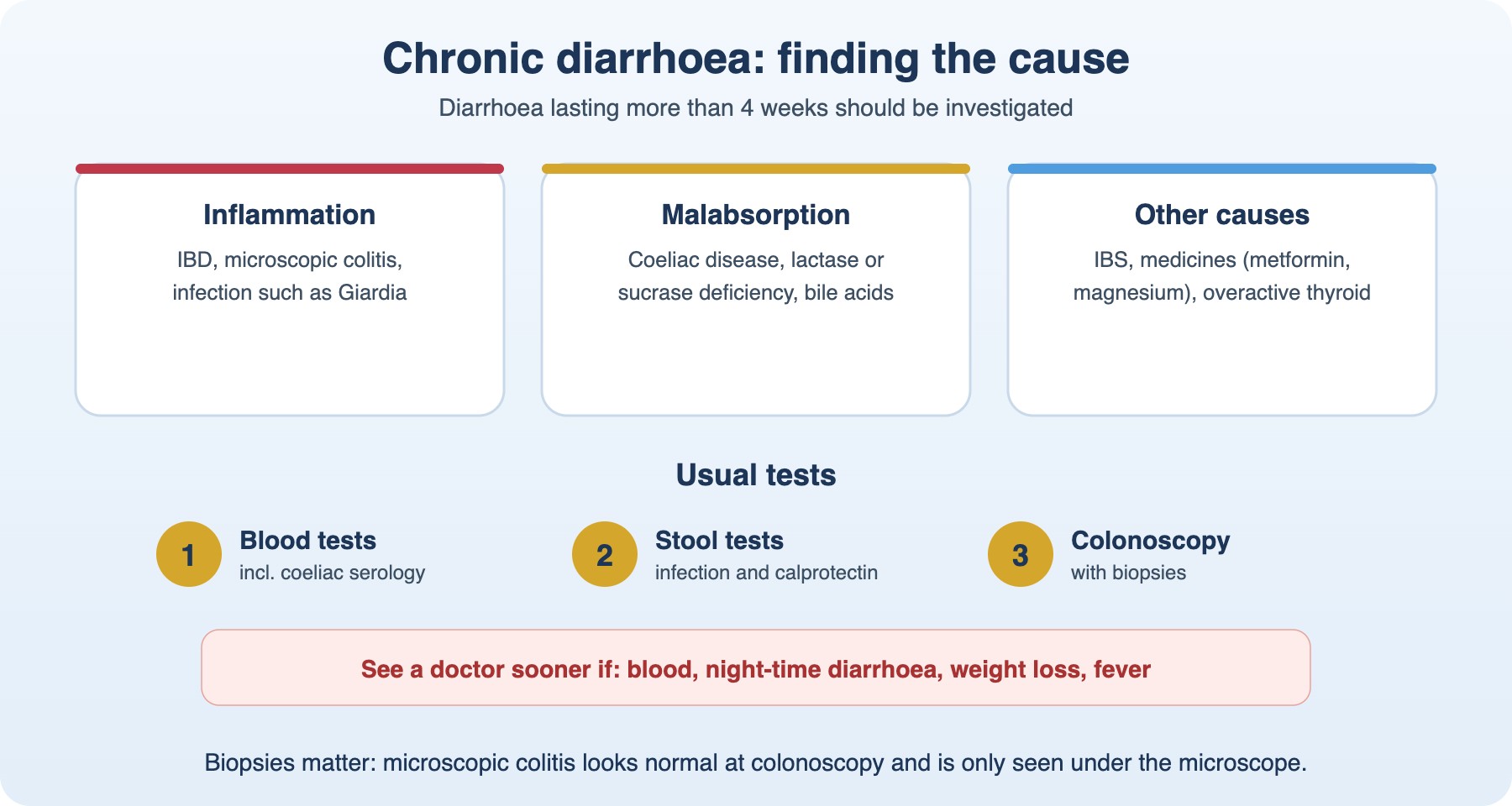
Diarrhoea lasting more than 4 weeks is called chronic diarrhoea and should be investigated. See a doctor sooner if there is blood in the stool, night-time diarrhoea, weight loss, fever, severe pain or dehydration.
What causes chronic diarrhoea?
Common causes include IBS, coeliac disease, inflammatory bowel disease, microscopic colitis, lactose intolerance, bile acid diarrhoea, medicines (such as metformin, magnesium or some antidepressants), an overactive thyroid and infections such as Giardia.
What tests might I need?
Blood tests (including coeliac serology and inflammatory markers), stool tests for infection and calprotectin (a marker of bowel inflammation), and often a colonoscopy with biopsies. Biopsies are important because microscopic colitis can only be seen under the microscope.
What is microscopic colitis?
Microscopic colitis is inflammation of the bowel lining that looks normal at colonoscopy but is seen in biopsies. It causes watery diarrhoea, often in people over 50, and can be linked to certain medicines. It usually responds well to treatment.
Related procedures and information
Book an appointment
If you have symptoms of chronic diarrhoea, see your GP or book a consultation with gastroenterologist Dr Ali Zad on (07) 2111 2600 or request an appointment online. You can book directly; a GP referral is needed for a Medicare rebate.
Dr Zad consults and performs procedures across Brisbane and Moreton Bay: Brisbane City and Spring Hill, North Lakes, Caboolture, Everton Park, Taringa and Redcliffe and Kippa-Ring.