

Written and reviewed by Dr Ali Zad, FRACP gastroenterologist, Brisbane. Last reviewed November 2026 against current Australian and international guidelines. General information only, not a substitute for personal medical advice.
Nausea can sometimes come with reflux. Read what causes acid reflux.
What is gastroparesis?
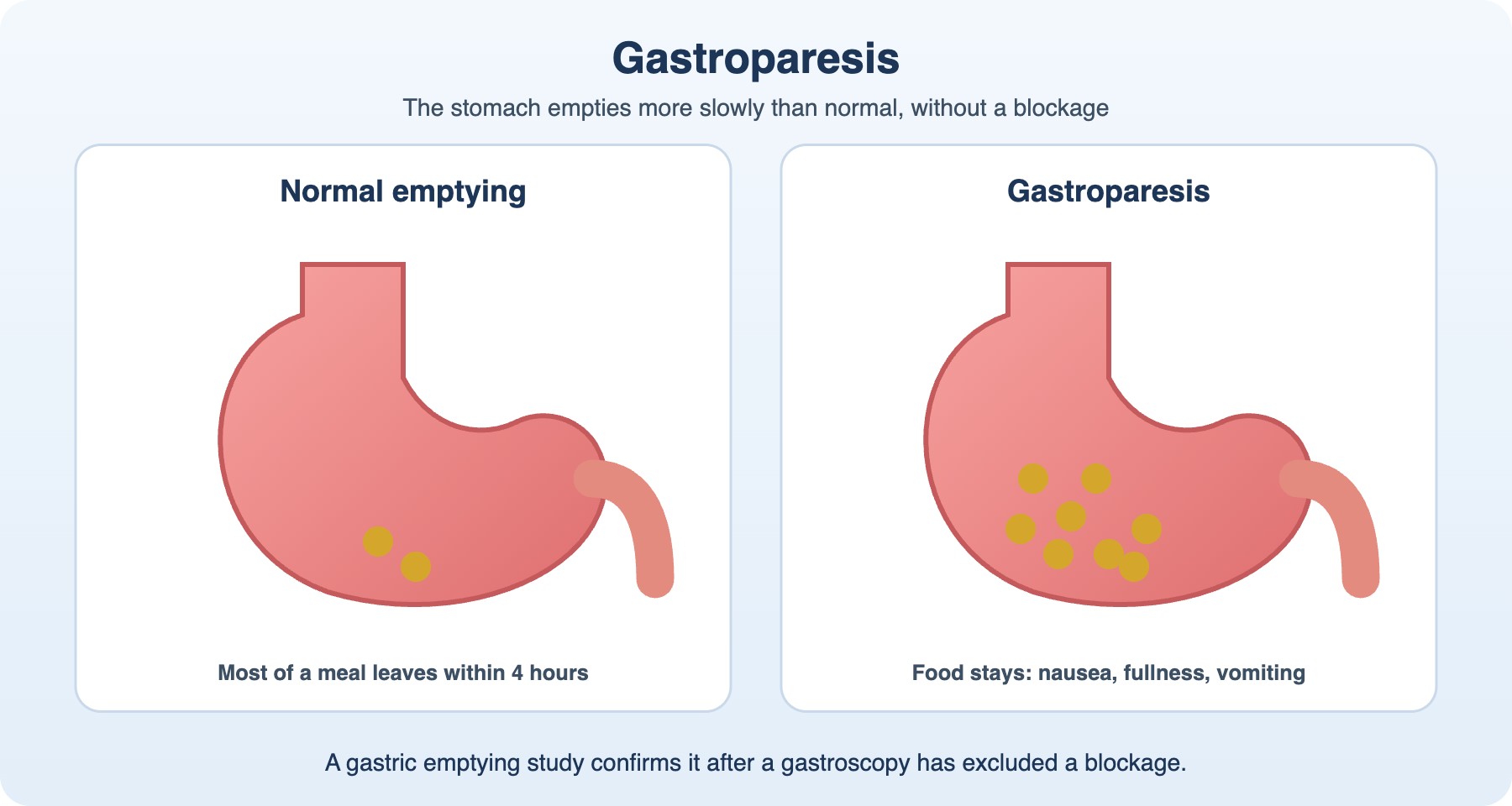
Gastroparesis means the stomach empties more slowly than normal without a blockage. It causes nausea, vomiting, early fullness, bloating and upper abdominal discomfort. It is more common in people with diabetes, after some surgery or viral infections, and can be caused by medicines such as opioids.
How is it diagnosed?
A gastroscopy is done first to exclude a blockage or ulcer. A gastric emptying study, where you eat a meal containing a tiny amount of a tracer, measures how quickly food leaves the stomach.
When should I worry about nausea or vomiting?
Seek urgent care for vomiting blood or material that looks like coffee grounds, severe abdominal pain, signs of dehydration, or vomiting that does not stop. Ongoing nausea, vomiting or weight loss should be assessed by your doctor.
Related procedures and information
Book an appointment
If you have symptoms of nausea, vomiting and gastroparesis, see your GP or book a consultation with gastroenterologist Dr Ali Zad on (07) 2111 2600 or request an appointment online. You can book directly; a GP referral is needed for a Medicare rebate.
Dr Zad consults and performs procedures across Brisbane and Moreton Bay: Brisbane City and Spring Hill, North Lakes, Caboolture, Everton Park, Taringa and Redcliffe and Kippa-Ring.