

Written and reviewed by Dr Ali Zad, FRACP gastroenterologist, Brisbane. Last reviewed November 2026 against current Australian and international guidelines. General information only, not a substitute for personal medical advice.
On this page
What is ulcerative colitis?
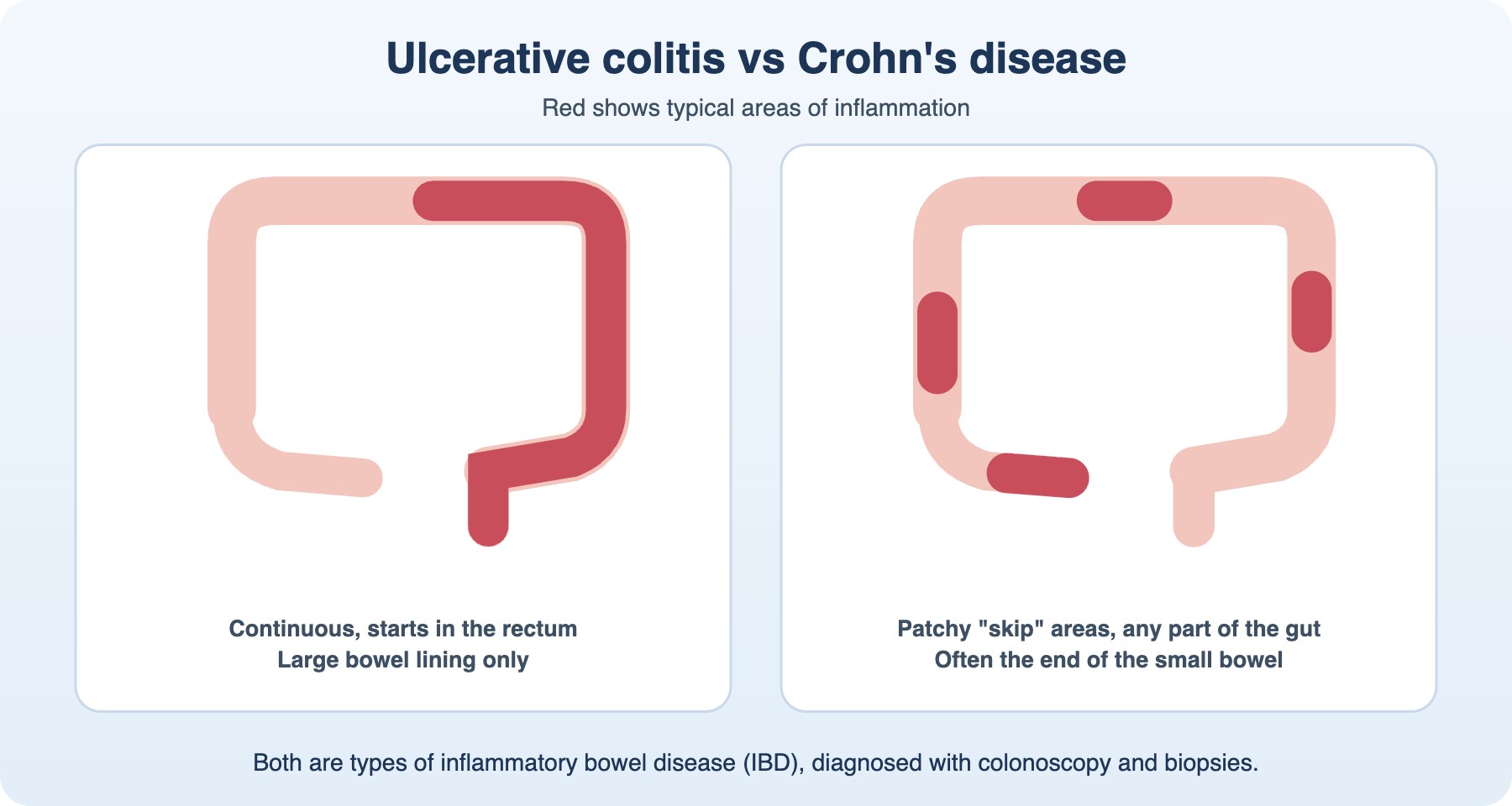
Ulcerative colitis is a type of inflammatory bowel disease that causes inflammation and ulcers in the lining of the large bowel. It always starts in the rectum and can extend continuously along part or all of the colon.
What are the symptoms of ulcerative colitis?
Common symptoms are bloody diarrhoea, mucus in the stools, urgency, frequent bowel motions, cramping and tiredness. Symptoms tend to come and go, with flares and periods of remission.
How is ulcerative colitis treated?
Mild to moderate colitis is usually treated with mesalazine tablets or suppositories. Steroids may be used for flares. People with more active disease may need immune-modifying medicines or advanced therapies such as biologics or JAK inhibitors. Surgery is occasionally needed.
Can diet cure ulcerative colitis?
No diet cures ulcerative colitis, but a balanced diet supports overall health. During flares, some people find a lower-fibre diet easier. A dietitian with IBD experience can help.
Related procedures and information
Book an appointment
If you have symptoms of ulcerative colitis, see your GP or book a consultation with gastroenterologist Dr Ali Zad on (07) 2111 2600 or request an appointment online. You can book directly; a GP referral is needed for a Medicare rebate.
Dr Zad consults and performs procedures across Brisbane and Moreton Bay: Brisbane City and Spring Hill, North Lakes, Caboolture, Everton Park, Taringa and Redcliffe and Kippa-Ring.