

Written and reviewed by Dr Ali Zad, FRACP gastroenterologist, Brisbane. Last reviewed November 2026 against current Australian and international guidelines. General information only, not a substitute for personal medical advice.
On this page
What is Crohn’s disease?
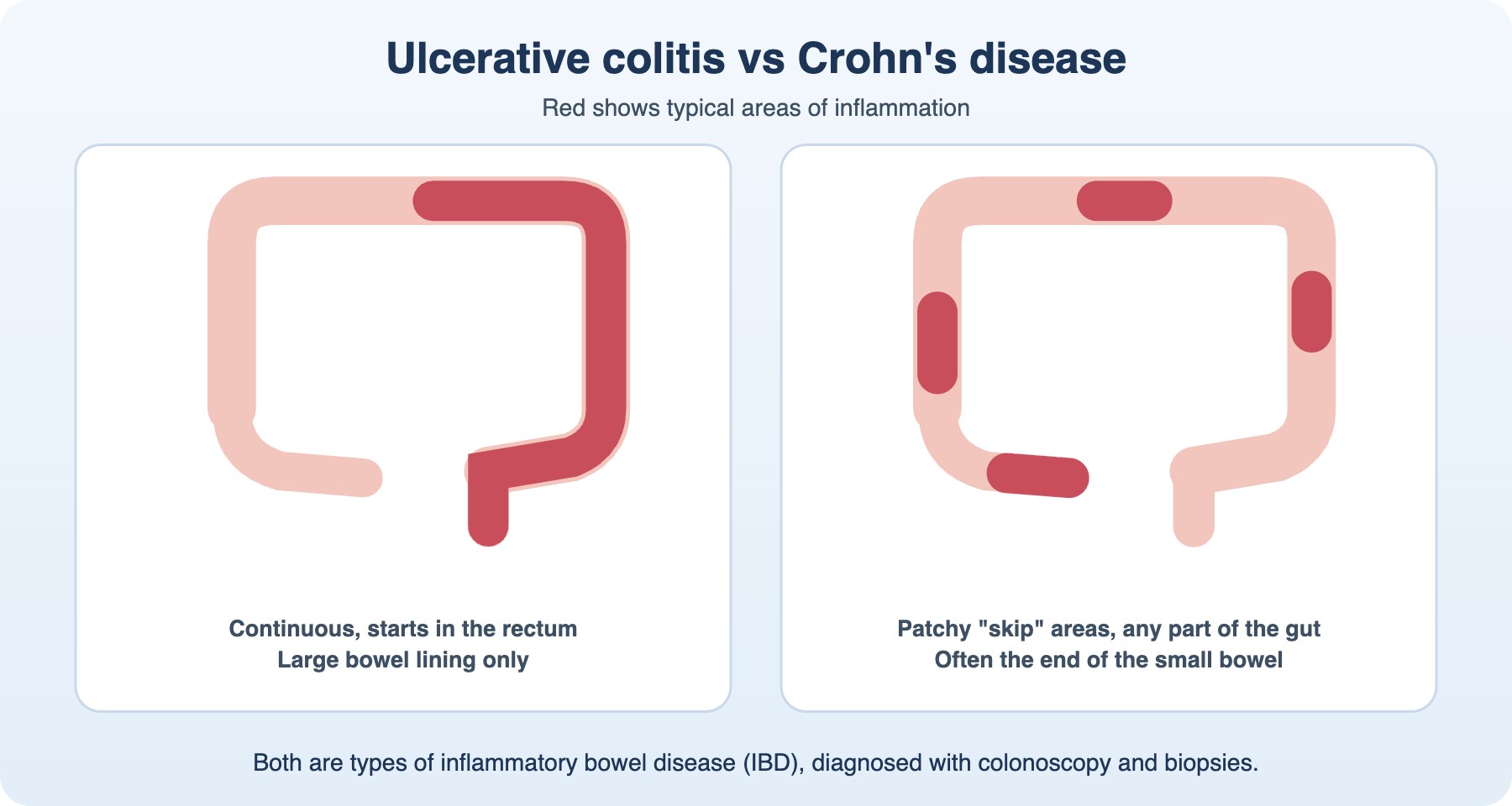
Crohn’s disease is a type of inflammatory bowel disease that can affect any part of the digestive tract, from the mouth to the anus, most commonly the end of the small intestine (terminal ileum). Inflammation can involve the full thickness of the bowel wall and occur in patches.
What are the symptoms of Crohn’s disease?
Symptoms include abdominal pain (often in the lower right), diarrhoea, weight loss, tiredness, mouth ulcers and sometimes fistulas or abscesses around the anus. Symptoms depend on which part of the gut is affected.
How is Crohn’s disease treated?
Treatment may include steroids or nutritional therapy for flares, immune-modifying medicines, and biologic or other advanced therapies to maintain remission and prevent complications. Stopping smoking is one of the most important steps, as smoking makes Crohn’s disease worse. Some people need surgery for strictures or fistulas.
Is Crohn’s disease the same as IBS?
No. Crohn’s disease causes visible inflammation and damage that can be seen on colonoscopy, scans and blood or stool tests. IBS causes symptoms without inflammation or damage. Tests such as faecal calprotectin help tell them apart.
Related procedures and information
- Colonoscopy with Dr Ali Zad
- Capsule endoscopy with Dr Ali Zad
- All digestive health questions and answers
- Patient education videos
Book an appointment
If you have symptoms of crohn’s disease, see your GP or book a consultation with gastroenterologist Dr Ali Zad on (07) 2111 2600 or request an appointment online. You can book directly; a GP referral is needed for a Medicare rebate.
Dr Zad consults and performs procedures across Brisbane and Moreton Bay: Brisbane City and Spring Hill, North Lakes, Caboolture, Everton Park, Taringa and Redcliffe and Kippa-Ring.