

Written and reviewed by Dr Ali Zad, FRACP gastroenterologist, Brisbane. Last reviewed November 2026 against current Australian and international guidelines. General information only, not a substitute for personal medical advice.
On this page
- What are diverticula?
- What is the difference between diverticulosis, diverticular disease and diverticulitis?
- What are the symptoms of diverticulitis?
- How is diverticulitis treated?
- Do I need to avoid nuts, seeds and popcorn?
- Can diverticular disease cause bleeding?
- Do I need a colonoscopy after diverticulitis?
- How can I prevent diverticular disease from causing problems?
What are diverticula?
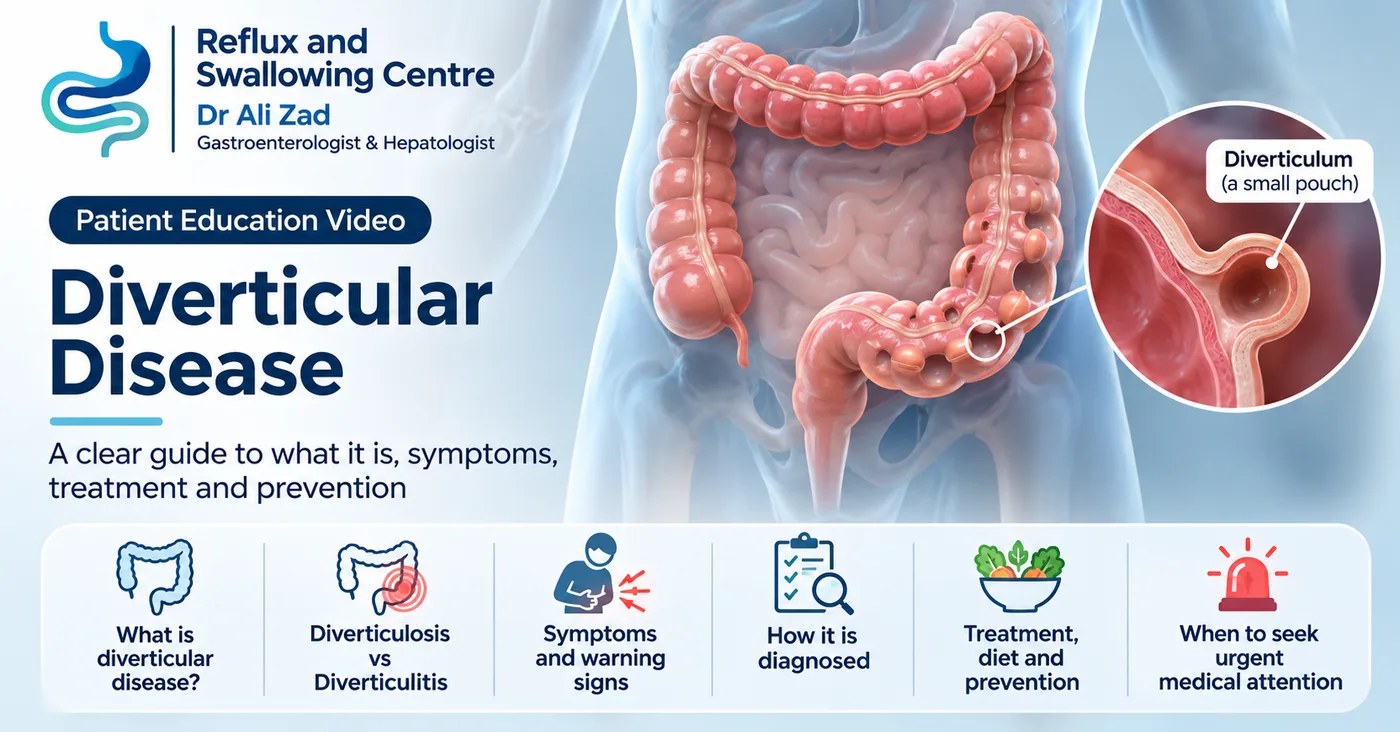
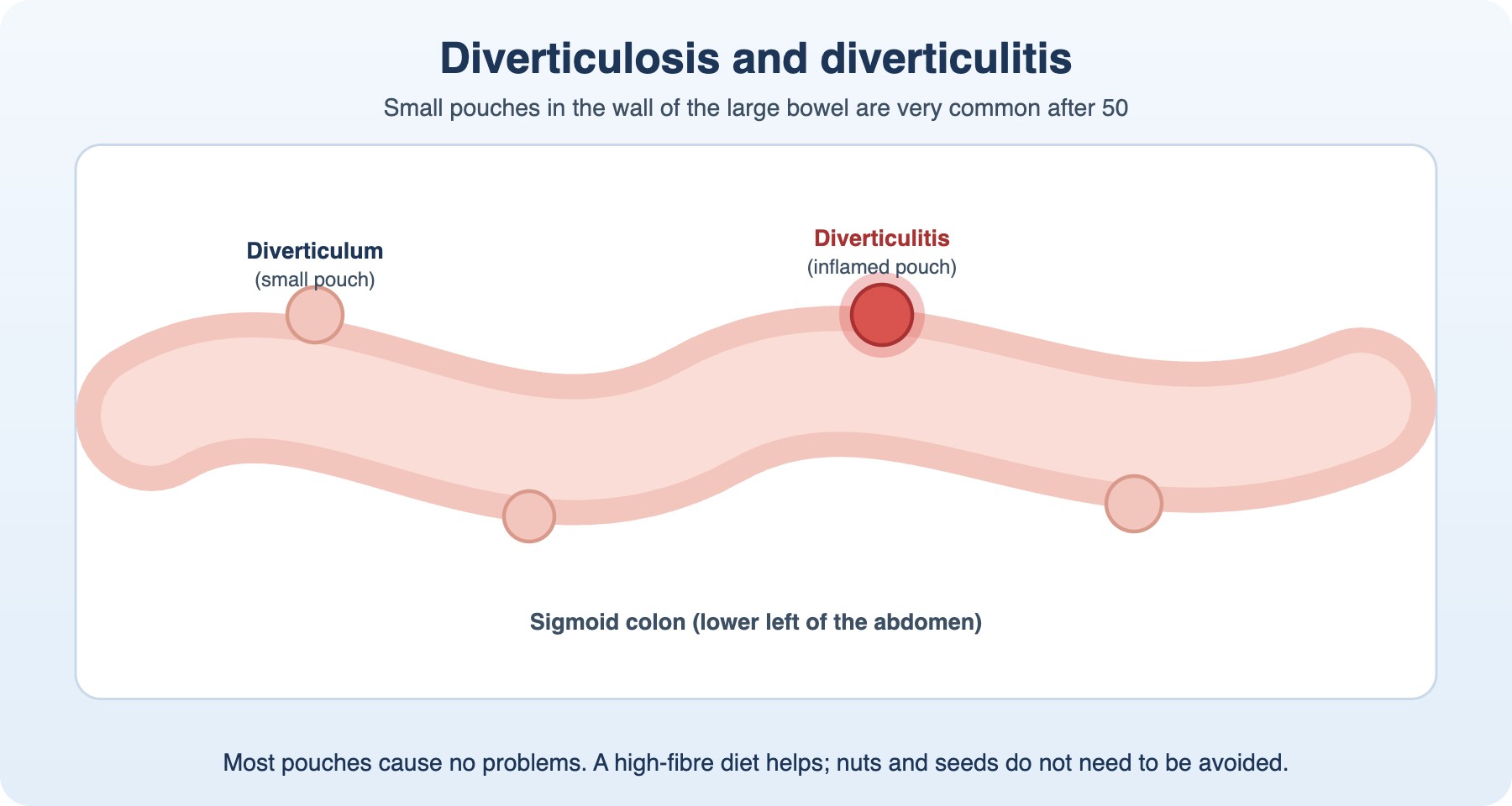
Diverticula are small pouches that bulge outward through weak spots in the wall of the large bowel, most often in the sigmoid colon on the lower left side. Having diverticula is called diverticulosis. It is very common, affecting more than half of people over 60, and usually causes no symptoms.
What is the difference between diverticulosis, diverticular disease and diverticulitis?
Diverticulosis means the pouches are present without symptoms. Diverticular disease means they cause symptoms such as pain or bloating. Diverticulitis means one or more pouches have become inflamed or infected.
What are the symptoms of diverticulitis?
Typical symptoms are constant pain and tenderness in the lower left abdomen, fever, nausea and a change in bowel habit. Seek urgent care if pain is severe, you have a high fever, vomiting, or cannot pass wind or stools.
How is diverticulitis treated?
Mild, uncomplicated diverticulitis is usually managed at home with rest, clear fluids then a gradual return to normal diet, and pain relief. Current guidelines advise that antibiotics are not routinely needed for low-risk uncomplicated cases, but they are used if there are high-risk features, a weakened immune system or other health concerns. More severe cases need hospital care with intravenous antibiotics, and occasionally drainage of an abscess or surgery.
Guideline: American College of Gastroenterology diverticulitis guideline, 2026.
Do I need to avoid nuts, seeds and popcorn?
No. This is a common myth. Studies have not shown that nuts, seeds, corn or popcorn cause diverticulitis, and current guidelines advise they do not need to be avoided. They are part of a healthy high-fibre diet.
Guideline: American College of Gastroenterology diverticulitis guideline, 2026.
Can diverticular disease cause bleeding?
Yes. A blood vessel near a diverticulum can bleed, causing sudden painless passage of a large amount of red or maroon blood. This needs urgent medical assessment, although the bleeding often stops on its own.
Do I need a colonoscopy after diverticulitis?
After complicated diverticulitis (for example with an abscess), a colonoscopy is recommended about 6 to 8 weeks after recovery to make sure a tumour is not being missed. After uncomplicated diverticulitis confirmed on CT, a colonoscopy is recommended if you have warning signs such as weight loss, bleeding or anaemia, or if you are not up to date with bowel cancer screening.
Guideline: American College of Gastroenterology diverticulitis guideline, 2026.
How can I prevent diverticular disease from causing problems?
A high-fibre diet rich in vegetables, fruit, wholegrains and legumes, less red and processed meat, regular exercise, a healthy weight and not smoking all reduce the risk of diverticulitis and complications. Regular use of anti-inflammatory medicines may increase the risk, so discuss these with your doctor.
Guideline: American College of Gastroenterology diverticulitis guideline, 2026.
Related procedures and information
Book an appointment
If you have symptoms of diverticular disease and diverticulitis, see your GP or book a consultation with gastroenterologist Dr Ali Zad on (07) 2111 2600 or request an appointment online. You can book directly; a GP referral is needed for a Medicare rebate.
Dr Zad consults and performs procedures across Brisbane and Moreton Bay: Brisbane City and Spring Hill, North Lakes, Caboolture, Everton Park, Taringa and Redcliffe and Kippa-Ring.