
Written and reviewed by Dr Ali Zad, FRACP gastroenterologist, Brisbane. Last reviewed November 2026 against current Australian and international guidelines. General information only, not a substitute for personal medical advice.
On this page
What is the difference between Crohn’s disease and ulcerative colitis?
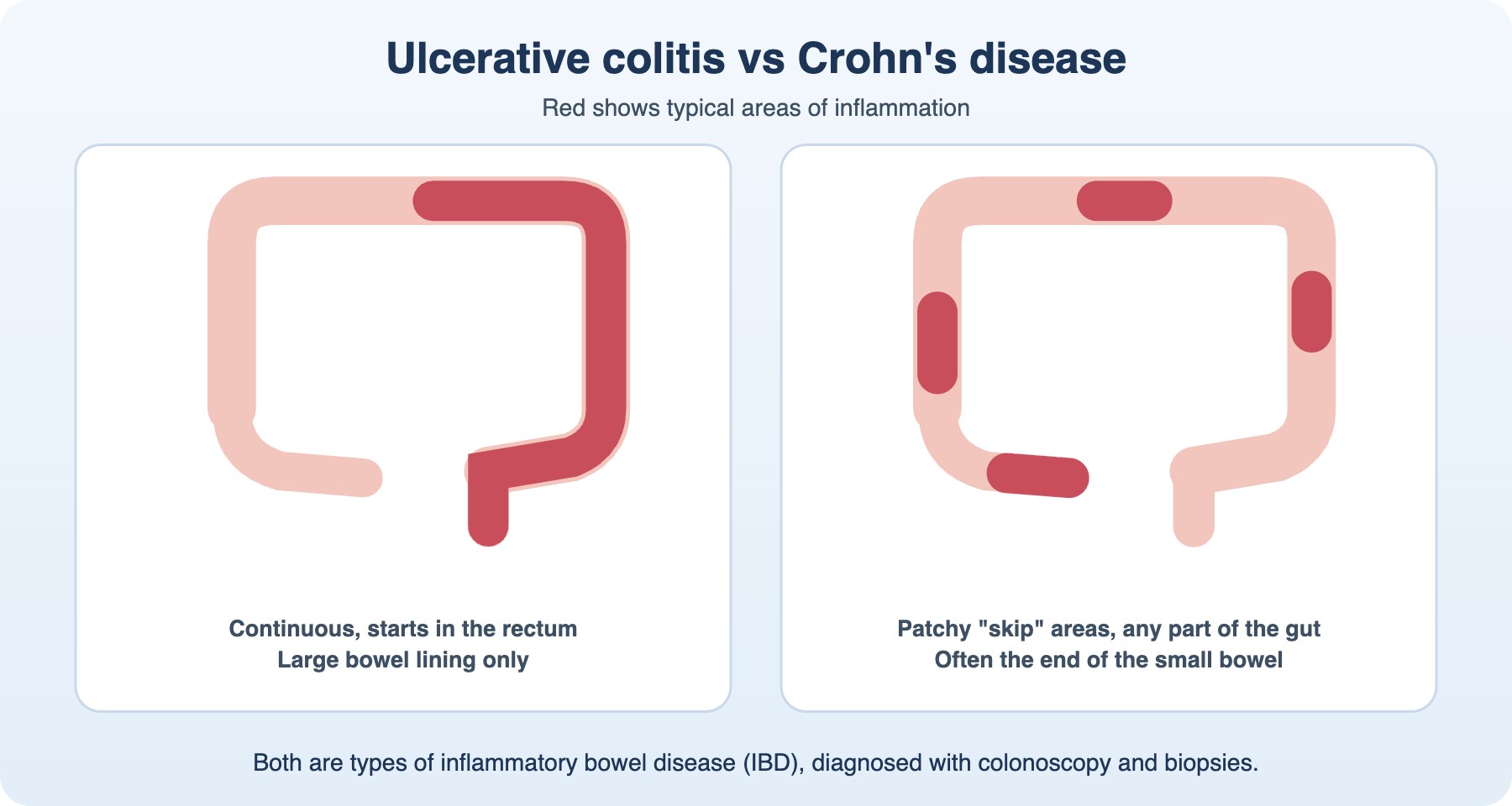
Both are types of inflammatory bowel disease (IBD). Ulcerative colitis affects only the large bowel lining, starting from the rectum. Crohn’s disease can affect any part of the gut, most often the end of the small bowel, and can involve the full thickness of the bowel wall.
What are the symptoms of IBD?
Symptoms include ongoing diarrhoea, blood or mucus in the stools, urgency, abdominal pain, tiredness and weight loss. Symptoms often come and go in flares.
How is IBD treated?
Treatment aims to control inflammation and keep the disease in remission. Options include aminosalicylates, steroids for flares, immune-modifying medicines, and biologic or advanced therapies given as tablets, injections or infusions. Regular monitoring is important to prevent complications.
What causes inflammatory bowel disease?
The exact cause is unknown. IBD results from an overactive immune response in the gut in people with a genetic tendency, influenced by the gut bacteria and environmental factors such as smoking (for Crohn’s disease). It is not caused by stress or diet, although these can affect symptoms.
How is IBD diagnosed?
Diagnosis combines blood tests, a stool calprotectin test, colonoscopy with biopsies and often imaging such as an MRI of the small bowel. Capsule endoscopy may be used to look at the small intestine in Crohn’s disease.
Can I have children if I have IBD?
Most people with IBD can have healthy pregnancies. The best outcomes occur when the disease is in remission before conception. Many IBD medicines are safe in pregnancy, so plan ahead with your gastroenterologist rather than stopping treatment.
Does IBD increase the risk of bowel cancer?
Long-standing colitis affecting more than a small part of the large bowel increases the risk of bowel cancer. Surveillance colonoscopy is recommended starting about 8 years after symptoms began, then every 1 to 5 years depending on your risk. People who also have primary sclerosing cholangitis (PSC) need yearly colonoscopy from diagnosis. Good control of inflammation also lowers the risk.
Guideline: Cancer Council Australia Clinical Practice Guidelines for the Prevention, Early Detection and Management of Colorectal Cancer.
Related procedures and information
- Colonoscopy with Dr Ali Zad
- Capsule endoscopy with Dr Ali Zad
- All digestive health questions and answers
- Patient education videos
Book an appointment
If you have symptoms of inflammatory bowel disease, see your GP or book a consultation with gastroenterologist Dr Ali Zad on (07) 2111 2600 or request an appointment online. You can book directly; a GP referral is needed for a Medicare rebate.
Dr Zad consults and performs procedures across Brisbane and Moreton Bay: Brisbane City and Spring Hill, North Lakes, Caboolture, Everton Park, Taringa and Redcliffe and Kippa-Ring.