

Written and reviewed by Dr Ali Zad, FRACP gastroenterologist, Brisbane. Last reviewed November 2026 against current Australian and international guidelines. General information only, not a substitute for personal medical advice.
What is pancreatitis?
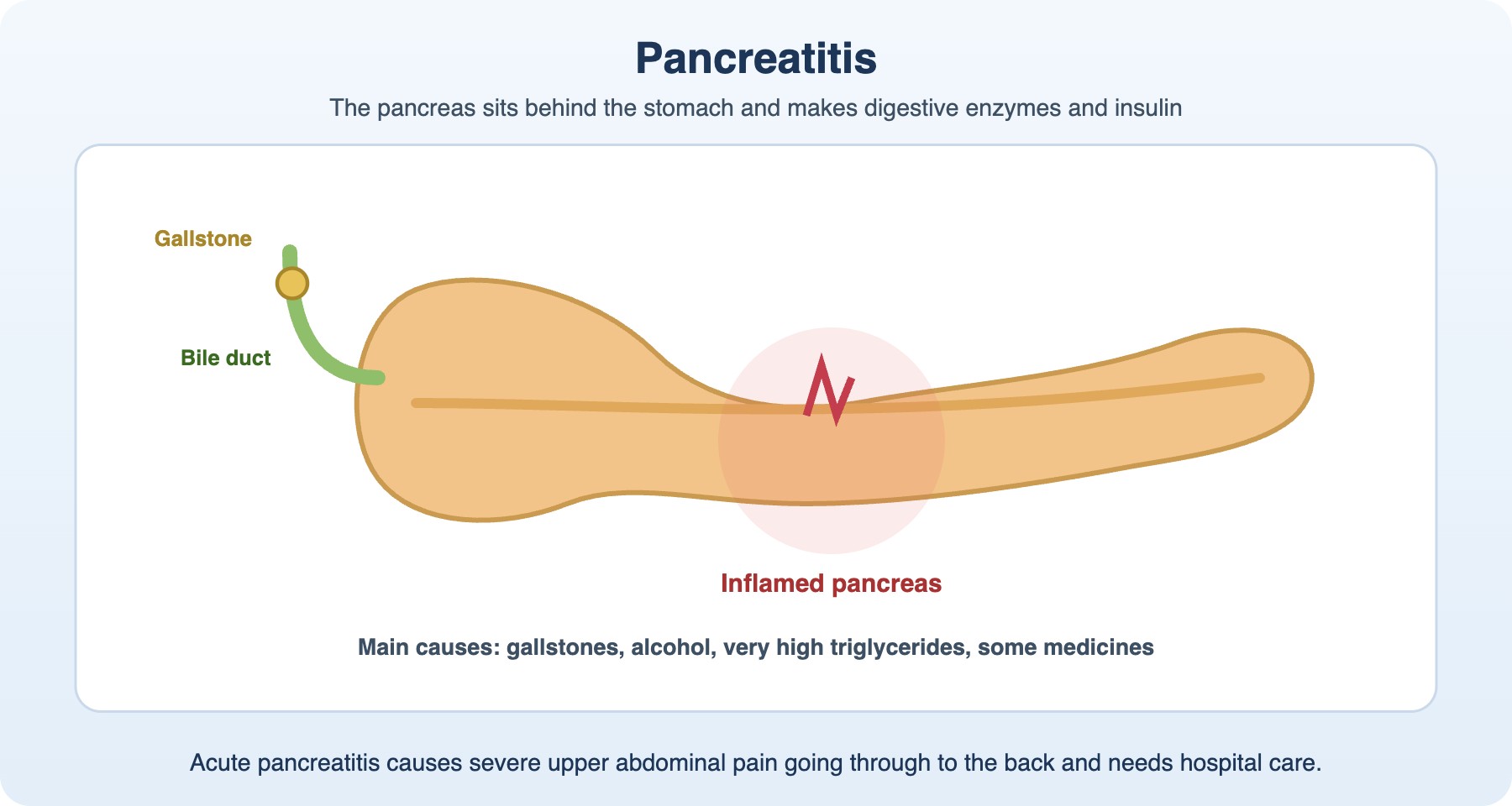
Pancreatitis is inflammation of the pancreas, the gland behind the stomach that makes digestive enzymes and insulin. Acute pancreatitis causes sudden severe upper abdominal pain, often going through to the back, with nausea and vomiting, and needs hospital care.
What causes pancreatitis?
The most common causes are gallstones and alcohol. Others include very high triglycerides, some medicines, high calcium levels and, rarely, a procedure called ERCP or a tumour.
What is chronic pancreatitis?
Chronic pancreatitis is long-term damage to the pancreas, most often from alcohol and smoking. It can cause ongoing pain, oily pale stools that are hard to flush (from poor fat absorption), weight loss and diabetes. Enzyme capsules taken with meals help digestion.
Related procedures and information
Book an appointment
If you have symptoms of pancreatitis, see your GP or book a consultation with gastroenterologist Dr Ali Zad on (07) 2111 2600 or request an appointment online. You can book directly; a GP referral is needed for a Medicare rebate.
Dr Zad consults and performs procedures across Brisbane and Moreton Bay: Brisbane City and Spring Hill, North Lakes, Caboolture, Everton Park, Taringa and Redcliffe and Kippa-Ring.